Gravity Is Not a Force
Drop something and it stops resisting. In Einstein's account, that is the normal state of affairs — and the ground pushing back at you is the real exception.
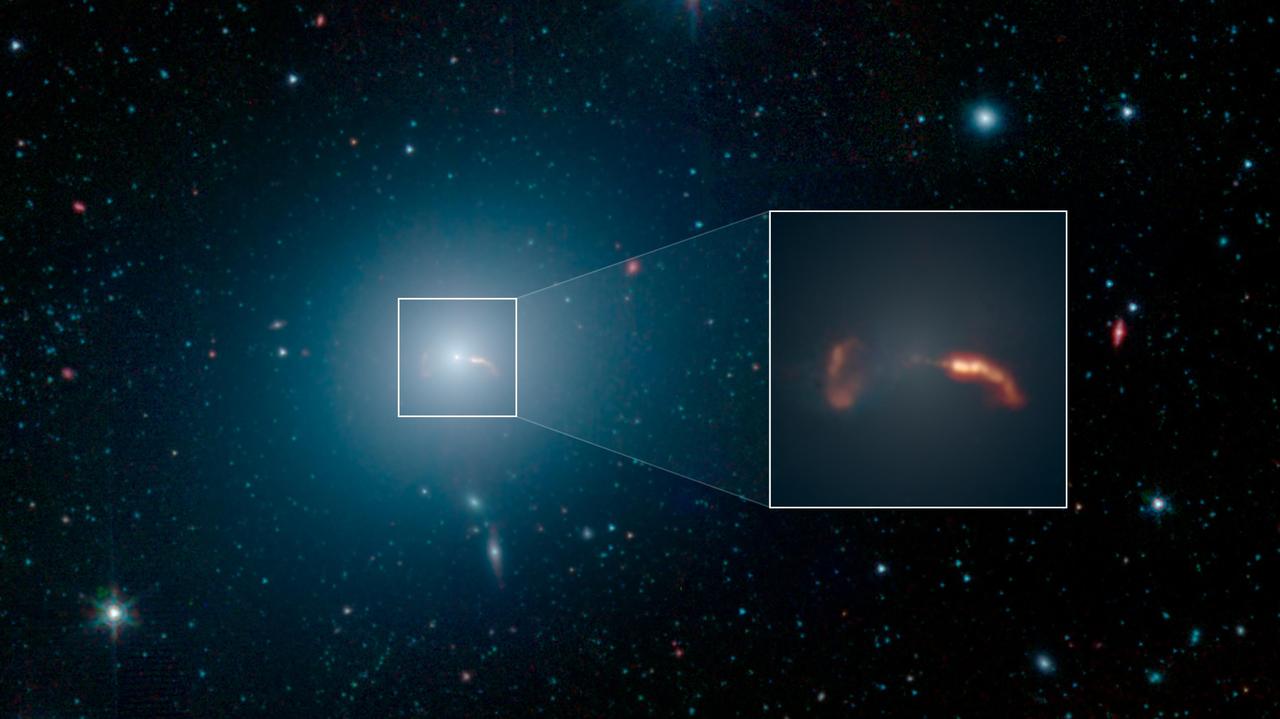
Stand on a chair and step off. For the fraction of a second before you land, you feel nothing — no pressure, no pull, no sense of being accelerated. That absence is not a quirk of human perception. It is the clue that general relativity follows to its conclusion: freely falling motion is straight-line motion, and what we call the force of gravity is the geometry in which straight lines happen to run.
In this picture, mass and energy bend spacetime, and freely falling bodies follow the straightest available paths through that curved geometry. The Earth does not “pull” an apple with an invisible rope. The apple, released, simply keeps moving in the most direct direction available, and the ground arrives to meet it.
Where the “no force” language shows itself
Because gravity is geometry rather than a pull, it affects everything identically in a way no other interaction can match. Test this in the most dramatic setting available. An Apollo astronaut dropped a hammer and a feather on the Moon in 1971, and both hit the surface at the same time. Without air to slow the feather, there was nothing to separate them.1
The same logic explains why the equivalence principle — that locally, free fall and floating in deep space are indistinguishable — is not a philosophical ornament but the foundation of the theory. Any experiment performed in a sealed, freely falling room gives the same result as the same experiment far from any mass. The claim is precise, and it has been tested with extraordinary care.
Where it has been tested
General relativity has survived every test thrown at it so far, and some of those tests are brutal:2
- confirmed The precession of Mercury's orbit — a mismatch with Newtonian predictions, resolved immediately by the new theory.
- confirmed Deflection of starlight by the Sun, measured during the 1919 eclipse expeditions.
- confirmed Gravitational redshift and time dilation, including on everyday GPS satellites, which must correct for both.
- confirmed Direct detection of gravitational waves in 2015 by LIGO, matching the predicted waveform.
- confirmed The shadow of a black hole, imaged by the Event Horizon Telescope collaboration in 2019.
And where it runs out of road
General relativity is a classical theory — spacetime is smooth. Quantum field theory, which describes the other three interactions with spectacular accuracy, is not. Deep inside a black hole, or in the first fraction of a second after the Big Bang, both theories must be applied at once, and no tested theory of quantum gravity exists yet.3
This is the central unresolved problem of the field, and it deserves a careful label rather than a headline:
- open Reconciling gravity with quantum mechanics is unsolved. Candidate programmes exist; none is confirmed.
- hypothesis String theory, loop quantum gravity, asymptotic safety and others are research programmes with real successes inside their scope — and no experimental confirmation.
- speculative Proposals that modify gravity on large scales to remove dark matter or dark energy from the picture remain unconfirmed and face tight observational constraints.
Why this matters beyond the maths
Understanding gravity as geometry is not an aesthetic choice. It is the reason we can predict, to fractions of a percent, how clocks drift in orbit, how starlight bends past a massive galaxy, and how two black holes ring down after merging. The next step — whatever it turns out to be — has to reproduce all of that, and it has to say something the current theory cannot.
Further reading (external sources)
- NASA, Apollo 15 hammer and feather experiment — nasa.gov (Apollo Lunar Surface Journal).
- NASA, “Einstein's Theory of General Relativity” and tests of relativity — science.nasa.gov/universe.
- Nobel Prize in Physics 2017, “Observation of gravitational waves” — nobelprize.org.
- Event Horizon Telescope collaboration, First M87 Event Horizon Telescope Results, ApJL 875, L1 (2019) — doi:10.3847/2041-8213/ab0ec7.
This article is an original explanatory text written for The Open System; it is not a translation or a reproduction of any source above. Sources are listed for verification and further reading. Image: NASA/ESA (public domain).